
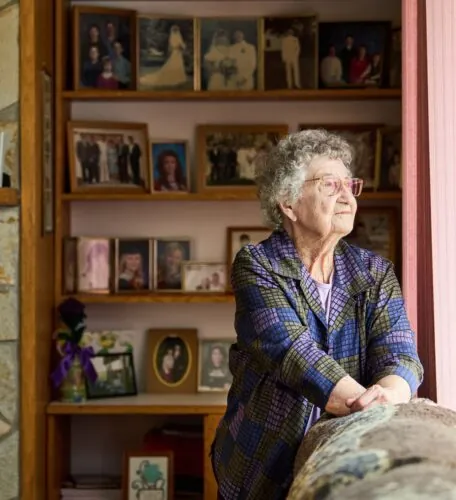
Home care that puts you at the centre
Depending on your needs, this might include help with the housework and cooking, transport to appointments or more complex supports like home modifications or nursing care.
Support at Home that works for you
Stay safe and happy at home
Be in charge of your care
Care Partners you can rely on
Feel comfortable with a team you can trust
Reach your goals and improve as you age
Get the most value from Support at Home

About the Support at Home program
Who is Support at Home for?
Any older person who needs support to live at home may be eligible for a Support at Home package. The first step is applying for a face-to-face assessment with My Aged Care to identify what services you need. You can learn more about how to apply for Support at Home on our Getting Started page.
After your assessment with My Aged Care, you will be placed into one of eight funding classifications ranging from $11,000 to $78,000 per year, designed to match the level of support you need. You then choose a provider to deliver your services.
Care Management:
To help you get the most out of your funding, 10% of your quarterly budget is automatically allocated to your service provider for care management. This will cover the ongoing coordination of your care and includes:
- Regular reviews of your care plan
- Adjustments to your services if your circumstances change
- Support with navigating government requirements and funding processes
Service Categories:
The services you can receive through Support at Home are grouped into three main categories, including:
- Clinical care: These services focus on your health and clinical needs, such as nursing, occupational therapy, and continence care.
- Independence: These services help you maintain your independence and include help with showering, dressing, taking medications, transport, or respite care.
- Everyday living: These services will support you at home, and include help with cleaning, gardening, shopping, or meal preparation.
Short-term pathways for extra support:
Support at Home also offers two additional short-term funding pathways:
- Restorative Care pathway: This provides up to 12 weeks of support from allied health professionals to help you stay independent and well.
- End of Life Pathway: This provides extra help during the final three months of life so you can stay at home where you are most comfortable.
Assistive Technology and home Modifications (AT-HM) Scheme:
Separate from your ongoing budget, the AT-HM Scheme provides up to $15,000 for assistive technology and home modifications. This can include:
- Mobility aids like walkers and wheelchairs,
- Home modifications, like ramps, grab rails or bathroom adjustments.
Contribution rates:
Under Support at Home, you’re expected to contribute to the cost of your care. Your contribution will depend on:
- the type of service/s you receive, and
- your income and assets.
Contribution by service category:
- Clinical care: These services are fully funded.
- Independence: These services will attract a moderate contribution.
- Everyday living: These services will attract a higher contribution.
Contribution depending on income and assets:
The Australian Government will assess your income and assets based on the Age Pension means test, with Commonwealth Seniors Health Card holders paying lower contributions than self-funded retirees.
- You can estimate your out-of-pocket costs by using the My Aged Care Support at Home Fee Estimator.
- You can learn more about Support at Home funding on our Understanding Aged Care Funding page.
- You can find out more about LiveBetter’s pricing on our Home Care Services Pricing page.
What happens when I choose LiveBetter as my Support at Home provider?
If you choose us as your provider, we will contact you to organise a visit to your home. This is so you can get to know us, and we can learn about your individual needs. Together, we’ll develop a care plan which delivers services that suits you. If you like, we can also include your family or friends in any decisions made.
Do you need more care than what you have been allocated in your Support at Home classification level? We can offer you additional private services until the government is able to refer you to a higher Support at Home classification level.